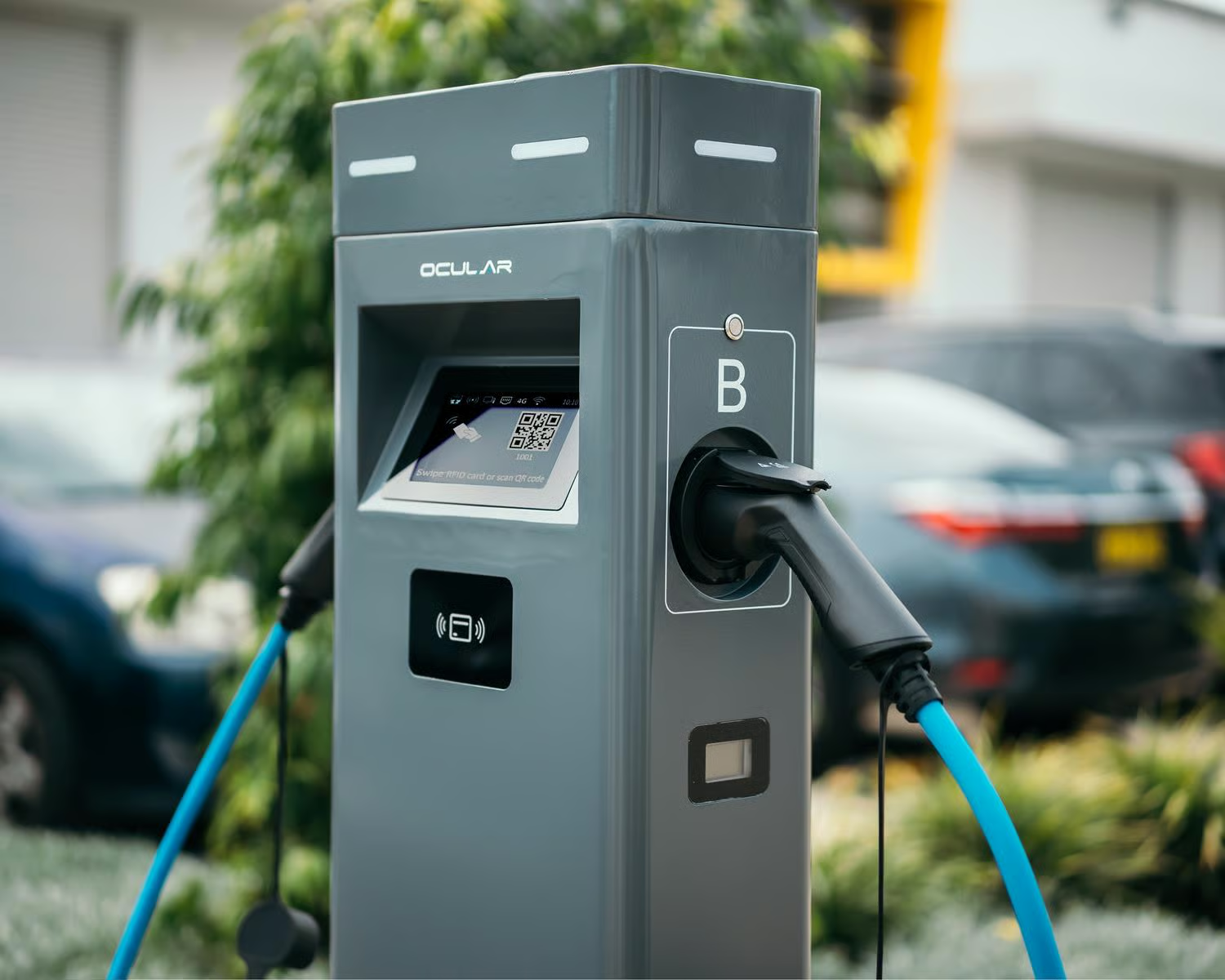
Thinking about making the switch to an electric vehicle, or just brought your shiny new EV home? Congratulations! You’re about to save a fortune on fuel and maintenance. But before you plug your car into a standard wall socket and wait 30 hours for a full charge, let’s talk about upgrading your home setup.
Choosing the right EV charger in Australia isn’t just about finding the cheapest box to stick on your garage wall. You need to factor in your home’s power supply, your solar panels, and how fast you actually need to top up.
Here is everything you need to know to make the smart choice.
1. Choose Your Speed: Level 1 vs. Level 2
When you buy an EV, it usually comes with a portable cable that plugs into a standard 10A household outlet. This is what we call Level 1 charging.
While it’s fine for emergencies, it is painfully slow—adding only about 10–15 km of range per hour. If you drive a standard distance daily, you’ll constantly find yourself playing catch-up.
Upgrading to a dedicated wall unit, known as Level 2 charging, changes the game entirely:
-
7kW Charger (Single-Phase): The standard for most Australian homes. It adds roughly 40–50 km of range per hour, easily fully charging your car overnight.
-
22kW Charger (Three-Phase): If your home has a three-phase power supply, you can opt for this ultra-fast option. It can add up to 120 km of range per hour. Note: Your EV must also be capable of accepting 22kW AC charging to get the full benefit!
2. Match Your Charger to Your Solar Setup
If you are one of the millions of Aussies with solar panels on your roof, this is your ultimate superpower.
A standard “dumb” charger will pull power from the grid whenever you plug it in, which means you could be paying peak electricity rates. A Smart EV Charger changes everything.
What is Solar Matching? Smart chargers can track your solar system’s excess generation in real-time. Instead of sending your clean energy back to the grid for a measly feed-in tariff, the charger diverts that exact amount of “free solar electricity” straight into your car’s battery.
3. Look for “Dynamic Load Balancing”
This is a technical term for something that saves you a massive headache.
If you come home on a hot afternoon, turn on your ducted air conditioning, start the clothes dryer, turn on the induction cooktop, and then plug in your 7kW EV charger, you risk overloading your main household circuit breaker.
A charger with Dynamic Load Balancing monitors your home’s total energy consumption. If your house is using a ton of power, the charger automatically dials back its speed. Once you turn off the oven or the AC cools the house down, the charger safely ramps back up to maximum speed.
4. Key Specs Checklist for Aussie Drivers
Before you hit “buy” on any charger, make sure it ticks these compliance and usability boxes:
| Feature | What to Look For | Why it Matters |
| IP Rating | IP54 or IP65 | Ensures the unit is weatherproof if installed outside in harsh Aussie sun and rain. |
| Tethered vs. Untethered | Tethered (attached cable) or Socket-only | Tethered means convenience (no grabbing the cable from the boot); untethered looks neater. |
| Connectivity | Wi-Fi, Bluetooth, or 4G | Allows you to schedule charging via an app during cheap midnight off-peak windows. |
| Compliance | RCM (Regulatory Compliance Mark) | Must be certified safe and legal for use on the Australian electrical grid. |
Ready to upgrade your drive?
Don’t leave your installation to chance. Connecting a high-powered appliance like an EV charger requires an experienced, licensed sparky who understands local grid regulations and load management.
At electricchargers.com.au, we supply and install top-tier, solar-ready smart chargers across Australia. Let us handle the tech so you can enjoy the ride.
[Contact our expert team today for an obligation-free installation quote!]
Leave a Reply